Tolworth United Reformed Church
Everyone is welcome here at Tolworth United Reformed Church.
Tolworth United Reformed Church
  • Home
  • About
    • Who Are We?
    • Location
    • Worship Times
    • What to Expect
    • Baptisms, Weddings and Funerals
    • The United Reformed Church
    • Church History
  • News
    • News
    • Church Newsletters
  • What’s On?
    • Calendar
  • Church Life
    • Sunday Morning Worship reflections
    • Mission
    • Children and Youth
    • Adults activities
    • Sermons.
    • Prayers
    • Bible Study
  • Community
    • Regular Activities
    • Using the Premises
    • Links
  • Contact us

Worship series at Tolworth United Reformed Church

For our Sunday worship on in the mornings service next year we will be  doing something a little different.  In discussion with Mr Mark Dennis, a regular worship leader at Tolworth as well as around the SYNOD,  we wondered if it would be helpful to a theme for a serious of our acts of worship together.

For two Sundays each month between January and April, just after Easter Mark and I will alternate (almost) leading worship on the theme of Being Church with reflection and reference to the Gospel of Mark.

Mark’s gospel was (almost) certainly the first gospel written.  As well as being closest to the life of Jesus, the narratives, teachings and stories would have been verbally handed on in the earliest of church life and communities.

You may remember a few years ago we embarked on planning and strategy using the work from the Robert Warrens books on spirituality and Mission in the local Church, Being Human, Being Church.  We have continually reviewed this strategy but it is probably good time to re-visit and re-do the plan and strategy again.

Perhaps this worship series would be a good place to start this.  It is certainly the right way around.  Worship and prayer comes first, then we can together seek what God is calling us to again…

We hope you will find the series helpful in our walk with God day by day as well as helping us as a faith community discern afresh  God in our midst.

Sunday series at Tolworth

January to April 2026

Being Church – Lessons from Mark’s Gospel

January 11             Session 1     Preparing the Way                                               Mark 1: 1-13  Isaiah 42: 1-9

January 18             Session 2     Responding to challenges                                 Mark 2: 1-17; 23-28         Isaiah 49: 1-7

February 01            Session 3     Responding to Jesus                                          Mark 3: 7-35  Micah 6: 1-8

February 15            Session 4     The emerging church                                         Mark 4: 1-20  Exodus 24: 12-18

[February 22 – Lent 1]

March 08                Session 5     Preparation and proclamation                           Mark 6: 1-13 Exodus 17: 1-7

March 15                Session 6     Being human: the way of the Cross                     Mark 8: 27-37        1 Samuel 16: 1-13

March 22                Session 7     The Gravity of the situation                                  Mark 10: 17-31  Ezekiel 37:1-14

[April 5 – Easter Day]

April 12                  Session 8     Forward in faith: the greatest commandment   Mark 12: 28-34  Psalm 16: 1-11

Preparing the Way Mark 1: 1-13 Isaiah 42: 1-9

Sermon Mark 1: 1-13   Introduction SERMON ONE-New Hope

 Sunday 11th January 2026

I am sure you have all read and digested Concord for January.  And can I say, in Ian’s absence that as a church magazine it is wonderful- there are 8-9 contributors week by week. This really good.  Keep it up and anyone else who wants to add stuff, Ian, I am assured wants it!

You would have read that we are beginning something new and different in worship this year.  We thought we would try a Sermon Series, based on a single theme over 3 months.  Mark Dennis and I, for three months, twice each month will lead worship and deliver a sermon themed series.

And the theme we have selected is Being Church, Being a Healthy Church based on the work of Robert Warren and will reflect and explore this theme using gospel of Mark.

I may add that we used Robert Warrens work  six years ago to help us plan and develop a strategy.  It is time to do this again.  So following the sermon series, after Easter we can again, as church to go through this process again. We will begin after Easter – and your “hopes for the church” we did earlier will be the starting point!

But for now, today, I will be introducing the theme and using the work of Warren from his book, Being Human, Being CHURCH – becoming a Healthy Church – whatever that is!

What do you think? Wealthy. We need money to function.  Well organised.  Everything in order!  Maybe it is the “people” I hear you say.  So is a healthy church lots of people.  A large worshipping congregation on Sunday morning. AND all getting on and being friendly!  Maybe having lots of young families and lots of children’s work to ensure we are here in the future!  What about being part of the community and helping and healing those in need.  Jesus did a lot of this!  OR fighting and standing up against injustice.  Jesus did a lot of this too. How about loving and caring for Gods creation and sustaining a world for the future makes. Is this a sign of a healthy church.

In preparation for our sermon series and how Mark’s gospel helps us with this sermon series, we begin in a good place. Mark’s gospel is a good place to start.

John the Baptist preparing the Way for Jesus. That is a good start surely.  Mark quotes Isaiah from a time when Gods people when in trouble in exile in Babylon! (Just a little earlier than our Hebrew reading from Isaiah today).  “I am sending a messenger” and Mark has John the Baptist as that messenger. Preparing people to meet God… In exile in Babylon, not a people resilient and bold, courageous hard working. But a community seeing how the world had changed for them, a struggling group and apparently having lost a sense of hope. In  the midst of this, there is hope, in Gods coming among them.

Unlike us, John the Baptizer is a wild and woolly character. But like us, he lives to point people to one who is greater than himself. John is the first Christian in the sense that he is the first who gives witness to Jesus. And so, beings the ministry of Jesus first with his baptism, “when the spirit descended upon him” and secondly when that same spirit drove him into the wilderness, its challenge and struggle.

Maybe this gives us a clue as to what our preparations for this sermon series and what a heathy church is about.

Wanting to  point people to God, appreciating how the  Spirit changes in us and drives us to this challenge.

In his Book Robert warren introduces the theme for us.

He describes  the church as needing a service. Like a car It has been on the road for almost two thousand years without servicing or overhaul!

He reflects on the change in society and community. Some for good.  Over this century the end of apartheid, peace on Northern Ireland, the Berlin Wall – and as examples of raising the humble, Marys song of in the Magnificat we find Nelson Mandela and Mother Theresa et al.

But, although a different time, the upheaval from conflicts persist today. Then, when the book was released as now, we have been largely powerless in the face of change.

And today we can see the polarisations of political positions, and local people caught up in the divisions created in and around the world.

Here is the mission field into which the church is a called and warren quotes John Westerhof, “Living in Faith in community” when he says, the purpose of the church is to manifest an alternative way of seeing and living life – that is to make this real! In preparation for our sermon series this is our brief introduction to Robert warrens book!

Also, we are introduced to the gospel of Mark for our sermon series.  Almost certainly the first of the four gospels written. Was it an account of Jesus life, like biography?  A history perhaps? Related to our introduction to this sermon series on church, the gospel was written for the earliest of Christian communities in change.

In the first 40-60 years  after Jesus crucifixion the new community of Jesus were convinced that Jesus’ return would occur in their lifetime. There was no need to write things down, Jesus would return and gather them up to heaven.  They celebrated the life of Jesus is story telling.

The early folk came to worship God and tells stories of Jesus.  These were almost first hand!  And even as these early folk were increasingly in danger from Rome and religious elite, they met in secret in the catacombs and told the stories.  These stories were handed down word of mouth.

Of course at some time came the realisation, as older parents passed away, that Jesus return would not be in the way first thought. But  they nonetheless  held onto Jesus teaching, and so at some stage possibly 60-75 years after Jesus life on earth, these stories were written down.

Many of the passages are found in both Luke and Matthew and so Marks gospel must have been used to write them.  Making these stories in of Mark as close to the life of Jesus as we can get.

That also means that this is as close to the human life of Jesus as we come. At Christmas with all the angels, and especially at Easter we often quickly jump to Jesus divinity, Jesus is GOD and ignore his human joy, despair, regret fun and laughter suffering – the human Jesus.  If Jesus were not fully HUMAN, with all the frailty, vulnerability, weakness we experience ourselves day by day, what kind of God is God I ask?

Which finally brings us back to the community in which the gospel of Mark was written. If you put all the stories of Jesus together, his life would last 4 weeks.  The first half of the gospel are largely stories of things Jesus did his healing, and the second half his teaching mostly the disciples.

So the gospel was for this new community, that was written in a time of upheaval and change  to make real an alternative was of seeing and living life…where have we heard all that?

It is kind of where we are now. As we begin this series we have been prepared for the theme and for the gospel, how we can tell the stories and make real God in our lives and lives of those around.  Maybe this series will help us in this venture.


Responding to Challenges Mark 2: 1-17 & 23-28

MARK’S GOSPEL : RESPONDING TO CHALLENGES  Readings: Mark 2: 1-17 & 23-28

 Sunday 18th January 2026

Introduction

We are continuing our exploration of Mark’s gospel this morning.  This gospel was written down about 60 years after the birth of Christ.  It is the earliest and most direct account that we have of the life, death and resurrection of Jesus Christ.

I wonder if you noticed a common theme in our reading from chapter 2 of Mark’s gospel?   Well, the stories in this chapter are all about the same thing.  How Jesus dealt with challenges.  And how Jesus dealt with challenges is important for us.  Why?  Because there are people and forces today still opposed to the teachings of Christ; and the advancement of the kingdom of God. Part of the purpose of this series of sermons is to help us build up the church.  And to help us build up the kingdom of God.  That means we need to know for ourselves how to deal with the kind of challenges that Jesus Christ faced.

Let’s see how challenges to Christ develop in Mark’s gospel.

First, the challenges are in people’s thoughts.  Then they become comments and questions to the disciples.  Finally, there is direct and deliberate attack.  This is more-or-less the same way that challenges and opposition always develop. First, thoughts.  Then comments to other people.  Finally, (if the feeling is strong enough) direct action.

What were the challenges that Christ had to deal with?  In chapter two of Mark, the religious leaders were opposed to Jesus for three main reasons:

Firstly, because of the claims he made; especially (verse 7) to forgive sins.

Secondly, because of the company he kept especially (verse 16) in eating and drinking with tax-collectors and sinners

And thirdly because of the customs he ignored; especially (verse 24) keeping the Sabbath

We’ll look at these, briefly, in turn.

 The claim to forgive sins (2: 7)

This is one of the Bible stories I remember from childhood (2: 3-5).  These four men taking off the roof from the house and lowering their paralysed friend down through the opening. (I must have been a destructive child!)   It must certainly have been a very dramatic event.

How does Jesus respond?  Well, he deals with the real roots of this man’s sickness.  True health is being in a right relationship with God.  And Jesus meets the man’s deepest need when he says: “My son, your sins are forgiven”.  Not what he expected; but certainly what he needed.

We need to remember that Jesus came from God, into this world, to confront, and deal with, evil in all its forms.  Sickness and disease are consequences of humankind’s sinful condition; and it is this condition that Jesus came to deal with.

And, of course, the teachers of the law; well, they are understandably upset by this.  Their response is perfectly proper.  Only God can forgive sin.  Consequently, Jesus is guilty of blasphemy.  There was an alternative explanation; but their eyes were blind to it.  Namely, that Jesus could, indeed, speak for God; because he was God incarnate.

Let me read a few words from C.S. Lewis on this claim by Jesus Christ to forgive sins, because they are very helpful (from ‘Mere Christianity’)

 “This is really so preposterous as to be comic.  We can all understand how someone forgives offences against themselves.  You tread on my toe; and I forgive you.  You steal my money and I forgive you.  But what should we make of someone, themselves unrobbed and untrodden on, who announced that they forgave you for treading on other people’s toes and stealing other people’s money?  Asinine fatuity [completely bonkers in modern language!) is the kindest description we should give of their conduct.  Yet this is what Jesus did.  He told people their sins were forgiven.  He never bothered to consult all the other people who their sins had undoubtedly injured.  He unhesitatingly behaved as if he was the person chiefly concerned; the person chiefly offended in all offences.  

 This makes sense only if he really was the God whose laws are broken and whose love is wounded in every sin.  In the mouth of any speaker who is not God, these words would imply what I can only regard as a silliness and conceit unrivalled by any other character in history.

 That was C. S. Lewis writing in the 1940s.  But in the time of Jesus’s ministry on earth, the teachers of the law; the Pharisees; they simply could not accept that Jesus was God.  They couldn’t accept it.  This is why they were opposed to Jesus.  And this is why they challenged him.

They were not bad people; they weren’t evil; but they became opposed to the work that Jesus did.  And it is still easy today for good people; religious people to resist, and become opposed to, some new work of God.  The challenge to us is to not fall into that trap.

  1. The company he kept (2:16)

So the claim that Jesus made to forgive sins; that generated opposition.  And, then, the second thing in Mark 2 was the company that he kept.

We see (verse 14) how Jesus called Levi to become one of his disciples.  (His other name was Matthew; and he is the Matthew of the first gospel).  But, when Jesus called him, he was a tax-collector.

Let us be quite clear, in Britain today, taxation is necessary to pay for essential services.  So tax-collectors, on the whole, are good people.  But at the time of Jesus, these tax-collectors were loathed.  They were working on behalf of an invading power; and they were notoriously dishonest.

We may be surprised that Jesus would want someone like Levi in his team.  But, according to Mark, Jesus clearly calls him. Directly and personally the call comes (v. 14); and Levi responds immediately.  And then, presumably as a spontaneous expression of joy, Levi throws a party for all his old friends (v. 15).  We can imagine every rogue – let’s go no stronger than that – every rogue in the area being there, shoulder-to-shoulder with Jesus.  Levi wanted to honour his new-found Master – and give others the chance to meet him.  We hear a lot about evangelism in the church, don’t we?  Well, Levi seems to have actually got on and done something about it.

When the Pharisees get to hear about this – they are scandalised.

Jesus mixing with all this rabble.  They think it is disgraceful.

But Jesus responds by saying that it is not those who think they’re OK who need help; but those who know they are not.  And he uses the memorable expression: “It is not the healthy that need a doctor, but those who are ill.”

But the Pharisees simply could not accept that they, as much as anyone else needed God’s forgiveness.  They couldn’t accept it.  This is another reason why they challenged Jesus.  They weren’t bad people or evil people; but neither were they themselves without sin.  They couldn’t accept this; or realise it; and so their opposition to Jesus grew.

And, again, it is still easy today for good people; religious people to resist, and oppose, God’s work.  God may have tremendous plans for us and our church, our community, our nation and our world.  The challenge to us is to work with God; and not in opposition to him.

  1. The customs he ignored (2: 24)

So, we’ve heard how the claim that Jesus made to forgive sins generated opposition.  And, then, how the company that he kept added to the opposition.

Finally, we come to what was, probably, his most serious failing in the eyes of the Pharisees; and that is the customs he ignored.  In particular, observance of the Sabbath.  We saw in chapter 2 (v. 23) how he allowed his disciples to pluck ears of corn on the Sabbath.  That incident is complemented by another at the beginning of chapter 3, where Jesus heals a man – on the Sabbath.

Once again, when the Pharisees see these events they think it’s appalling.

For them, observance of the Sabbath was a very important custom.  To see it flouted in this way was terrible.  And Jesus responds with another of his memorable expressions: “The Sabbath was made for the sake of man; not man for the Sabbath”.  The Pharisees wanted the security of rules and regulations and laws to tell them what to do and not to do.

Jesus begins to show them a new revolutionary way; the way of personally responding to God; and how God loves people more than rules.

Rules have their limitations.

Legislation almost always requires definition.

Often the law is quite useless.  A tragic example is seen in cases of two babies born as Siamese twins; two babies physically joined together.  Judges sometimes have to decide whether they should be surgically separated – against the wishes of their parents – to try and save the life of the stronger twin; while ending the life of the weaker child.

The law is quite useless to those parents and their children in that situation.

And so the message of Jesus is quite clear: people matter more than rules, customs and laws.

Conclusion

We have seen how Jesus dealt with challenges.  How can this help us to deal with those who challenge and oppose him today?  What Jesus does is to get behind petty criticisms of points of detail to fundamental truths that are at the heart of existence.   Truths like these:

True health is not a matter of our physical condition : it is a question of whether our relationship with God is healthy.

It is not the healthy that need a doctor, but the sick.

People are more important than rules and laws.

Jesus brings new light to shine on God’s relationship with us and all people; and new light on our relationship with God.  The challenge to us is to live our lives so that they reflect his teaching.

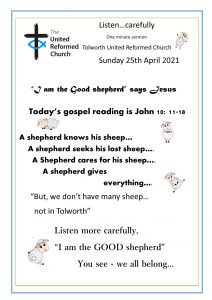
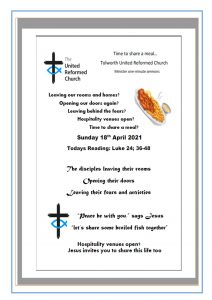
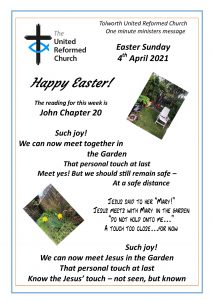
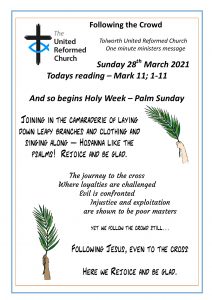
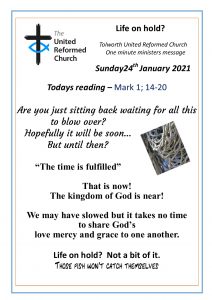
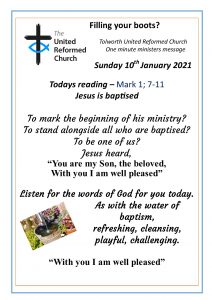
One minute sermons displayed on the Church Notice board during the COVID-19 crisis.

……….………………..

Sermons

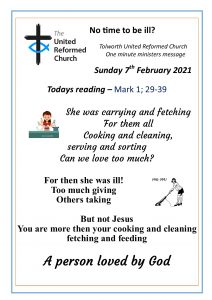
Mark 1; 29-39 Peter's Mother -in-Law

Mark 1; 29-39 Peter’s mother-in-law


“Boy,” I think, with some annoyance, “When that daughter and son–in-law of mine get home I’m going to show em!”


They think this is all I’m good for!  Serving up a few meals when they want it.    I’ll show them.  When I’m better, when I get my strength back I’ll show em!  But my bones ache so.  I just want to lie down and rest all the time!  They left me in bed this morning, that daughter and son-in-law of mine.  But how can I stay in bed with all this work to do.  When I’m better and get my strength back – that’s when I’ll tell em.

That son-in-law of mine, good-for-nothing if its not out fishing for all the hours God sends, he’s off following that preacher bloke to goodness knows where.  What about my daughter eh!  That’s what I ought to tell him.  Leaving her to fend for the kids and clearing the house up and washing those filthy, fish-smelling cloths of his.  That’s what I ought to tell him.  When I get my strength back – that’s when I’ll tell em.  That’s when I’m going to show em.

Mind you, she’s not much better!  She comes home complaining about him – Peter this and Peter that!  Wants my shoulder to cry on then O yes!  How he ‘s always leaving her with the children, doesn’t know where he is half the time.  Of course she has to wash and clear up after him – that’s her job isn’t it – don’t come winging to me.  That’s not all I’m good for either.  Yes that’s when I’m going to show em.

O how my bones ache so.  How I am so tired. I just want to rest.  Lie down and let the world go on around me, just for a while, please.  It’s so hard.  I feel like this, death warmed up – but I still have to get that water on the boil and get the vegetables peeled – that’s the job I hate most when I feel like this.  I’ have to sit down and do it when I’m feeling this tired.  And then their kids start crying and wanting to play or something to eat!  I can feel myself getting irritable – and its not their fault – I know, but well you just take it out on them.  What is she leaving me with their children for anyway!

How can I go on like this?

Eventually I can’t take it anymore, I just lay down, close my eyes.  Just a few moments sleep, just a few moments.  And I sleep!

Then I felt his hand upon me – his hand touched mine and slowly tightened.  As I opened my eyes and tried to focus I saw his eyes looking into mine.  I glanced just beyond him and Peter and the others were standing by the door, just watching.  I briefly noticed my daughter had gone to the children.  But my gaze quickly returned to the man whose hand was holding mine. He gently lifted me until I was standing.

I can tell you, usually when I’ve had a fever like this it takes sometime to shake it.  Usually I’m up working again, before I’m better still tired and aching but knowing that I have to keep going. You have to don’t you?   Not this time. No not this time. Once I was standing I immediately felt the strength surge through my body – I felt stronger – strong enough again and began getting them all seated around our large dinner table.  I was so excited that I could again begin to do the thing I enjoyed – the thing I liked doing best, serving them all with a good meal.  First with a few drinks while they sat and talked and then heating up the meal, passing the plates and making jokes.  Then scooping out the food and putting onto their plates and watching them as they eat, joining in their easy talk. Getting the feel of pride as they comment on how good it is.

Then I want to tell them.  To show em.  This is not all I can do you know.  I can do more than cook and serve up food.  It’s not just all this cooking and cleaning and looking after the children  that I am good at.   But I wanted to tell him first – the one who had held my hand and lifted me up.  So I took my moment.  As the talk quietened I went to stand beside him with a bowl of fruit.  I offered him the bowl and I was just about to speak and I into saw in his eyes – he knew.  I didn’t need to say it.  I didn’t need to him.  “This is not all I am good for.  Not all of who I am.  You see when the greatest praise I got growing up was – “you won’t get a peep out of her” or  “quiet as a mouse”.  So we kept our head down and got on with the housework thinking that is all we are good for.   But this cooking and cleaning doesn’t make me who I really am– I can enjoy it, sometimes, but I am so much more than all of this, and I could tell he knew.   And that convinced myself!

The others well sure I’d have to tell them at some point.  They think that this is all I am good for.  But not yet.  For now I wallow in the new found strength and confidence I have found.  And I didn’t tell him.   A short time later they had all left.

I heard later how so many, many more people were all finding their way to him looking themselves for strength and health.  Did they understand?  Was it just the curing of their diseases and ills they wanted and found?  Who knows?  Some must surely have looked into those eyes as I had done.  I so much wanted to ask but there wasn’t the time.

Early the next morning Peter and the others were gulping down their breakfast.  “He’s gone off on his own,” one said.  “to be alone I expect” said another.  “Doesn’t he know there will be crowds searching for him today.”  “Quick, lets go to find him, get him back”.   I told them! “Let him be,” I said,  “he must need some time alone.”  They didn’t listen. They woofed down their breakfast, grabbed their tunics and were gone.  “Whose going to clear up your mess?” I shouted after them, half smiling.  I have to face that one later.  But for now…

The next thing I hear is that he’s moved on.  He wasn’t staying around looking for favours or faint praise.  He had work to do.  He’d done his work here.  I could understand that.  He knew how I could carry on in my own small ways – and just serving others with food, although that was important.  There was so much more I could do

I am not sure if Peter understood.  Maybe he’ll grow up one day.  But I can understand why he wants to be with him – follow him and learn from him.  Whatever the future holds for them.

“Peter will be back,” I tell my daughter and I think she understands too.  And she’ll keep nipping off to be with him when she gets the chance.

That means I still do lots of cooking and looking after the kids.  And mostly I enjoy it.  I still get tired of course.  And I get fed up with the cooking and cleaning.  I’m still left with the kids.  And when I get ill again its still a struggle to keep going.  But it is different now.  I know it’s not all I’m good for.  I know there is so more to me.  There is more of who I am waiting to get out everyday.

And “Boy,” I think, laughing this time, “when that daughter and son–in-law of mine get home – yes then I’m going to show em.”

John 20; verses 19-31 Think you know me…well I'm Thomas?

John 20; verses 19-31 Think you know me…well I’m Thomas?


You think you know me don’t you?  You think you’ve got me sussed. We like to think that about others don’t we?  Sum people up by one thing that they have said or done.  Well I thought it was about time I set the record straight.  Think you know me?– I don’t think you know me at all.  All these years you’ve using my name in some derogatory fashion, or worse still with some kind of patronising humour.

“Doubting Thomas”  and then snigger.  Or “doubting Thomas” and a shake of the head, “poor ol’ doubting Thomas”.  Well I don’t want your sympathy.  I don’t even need your sympathy.  In fact I didn’t do anything wrong.  True I questioned the other disciples. True I said I wanted to see Jesus for myself.  True I even said wanted to touch his wounds.  But,  I am telling you now it was nothing to be ashamed of.  In fact, it’s a shame a few more people don’t ask a few more questions.  Yes, challenge a few of the people telling us what to believe.  Not just take everything because it says it here or there or so and so told me that!  No I am here to let you know,  you need to ask some of the difficult questions.  People won’t like it of course.  They’ll think you causing trouble, being difficult, probably call you a “doubting Thomas” or “doubting Theresa”. But don’t worry.  You know, Jesus didn’t!

No I am here to put the record straight.  I wasn’t doubting Jesus or questioning God,  NO!  I was doing exactly what Jesus had been teaching – trying to see and believe!

Now think about me for a minute!  May be you think I was frightened, scared at the thought that Jesus was alive again and all ready to run a mile from a ghost!  Or, frightened that if, we started talking about Jesus being alive again, then the Romans or religious authorities would come and get us.  Well you can think again.  Remember when Jesus said, “lets go back to Bethany to Lazarus”?  All the rest said to him, “Ooo, no it was too dangerous”, “they tried to stone you there Jesus, you don’t want to walk back in to that again”   Who was who said,  “let us go with him and face the music by his side”.  Yep, yours truly!  I wasn’t frightened then and, for your information, I was not frightened in that room!

If you said the others were frightened, well I might not argue.  Remember when Jesus first appeared to the disciples.  They were all frightened and had locked themselves away.  And me!  Well I wasn’t there was I?  If I had have been there I have seen him with the others.    No, when they were all hidden and locked away, I was out, walking the streets, trying to find out what was going on.  That is not the action of a frightened man. That is the action of a….an “action man” if you ASK ME!    No I wasn’t frightened.  It wasn’t fear that led me to question the others when they said they had seen Jesus.

I wasn’t scared of a  ghost or goolies ( I could watch your DrWho with out going behind the couch anyday) and I wasn’t scared of the authorities either.  NO you had better try again if you think that that was the reason I would not believe until I saw the marks on his hands and his side. Incidentally how did I know he had the wound in his side?  I’ll tell you I was there when Jesus was being crucified.  The others were hiding, apart from the women of course, and I didn’t get as close to him as they.  They’ve got more guts the rest of us put together. But I did go and I saw him die.  That wasn’t the action of a frightened man either.

I suppose I was always asking questions.  Like…when… we were all sitting around the dinner table that last night.  Jesus told us we would not be able to follow him where he was going.  Well, I asked him straight out.  “ How can we follow you if we don’t where you are going”.  I didn’t really understand what he was saying. No I grant you that.  Some of those things he was saying were a bit confusing.  But Jesus was telling us to ask questions and think for ourselves- even be ourselves.  I loved his stories – you know – those ones when he didn’t tell us all the answers to!  He just left us hanging on the punch line.  He was wanting us to go away and think about what he had just said.  Not to just believe with unquestioning acceptance.

You know, I get quite exasperated sometimes with all those people who just accept what is said to them, “because you must to have faith”. They hear things about God and blindly accept without wondering and exploring what God might really be saying and doing. Some really clever people too!  It’s like they leave their brains at home when they start speaking about God.  I mean lets face it,  when you think about the awesome claims that Jesus made about faith, you have to…well think about it don’t you.

You see I wasn’t about to rely blindly on what others were saying about Jesus.  Or more importantly even, I just couldn’t believe that after all those awful events that previous week, that faith could be so trivial.  My heart wanted to believe of course it did, but my mind would not allow it.  and from what I remembered about what Jesus had said and did, faith was no trivial for him either.  The God that Jesus showed to me demanded that I use my heart and my mind, the way Jesus had taught us.  Jesus had taught us about a God who was concerned about my heart and my feelings, but also about my mind and my real experience too.  So there I was. I wasn’t about to believe just because others said so. Or because it simply felt good and I wanted to believe it.  That was too easy and faith is not that easy.  And asking to see his hands and touch his wounds?  That wasn’t about wanting proof, or signs or miracles.  It wasn’t about seeing to believe.  It was about seeing and believing.

When eventually it happened.  When Jesus was there in front of me.  Sharing his own peace with us, well… I knew about his wounds sure.  He invited me to prove it to myself, by touching those wounds.  I think he knew I wouldn’t touch him.  He knew that the moment I attempted to touch his hands or his side for proof, he would just disappear, because it would no longer be an act of faith.  All I could do at the moment was recognise Jesus as the Lord we had known on earth, and then recognise the very God in whom I could have faith.  I actually said it didn’t I.  “My Lord and my God”.

So I just want to put the record straight.  You see I am a lot like you really.  I wasn’t there at the beginning when Jesus first appeared after the crucifixion.  And I couldn’t have faith from signs and miracles or see them as proof.  That wouldn’t be any faith at all.

But I did want my faith to be real.  That is not going to make me frightened to face to the world. Is not going to rely signs and miracles.  The kind of faith stands up to questions and challenges and deepens when I ask the questions and make the challenges.

So when you think about me again.  When you snigger and say “poor o’ doubting Thomas”.  You think about yourself.  And ask your questions and face your doubts.  You see I’ve put the record straight now.   See how your faith can deepen just like mine!

(c) 2026 Tolworth United Reformed Church – Powered by WordPress, Designed by Theme Blvd, Website by iChurch

Tolworth United Reformed Church
x
Top
Everyone is welcome here at Tolworth United Reformed Church.
We use cookies to ensure that we give you the best experience on our website. If you continue to use this site we will assume that you are happy with it.